Brain health begins before birth. During pregnancy, a baby depends on nutrients from the mother, including choline and omega-3 fats such as DHA. Eggs, meat, liver, and fatty fish provide nutrients that support growth and development. After birth, breast milk naturally contains fat. As solid foods are introduced, fat should continue to have a place in a child’s diet.
A mother may hear that her baby is not gaining weight because her milk is “not fatty enough.” That concern deserves a closer look. Breast milk contains fat, and its fat content changes during a feeding and over the course of lactation.
During breastfeeding, a mother needs nourishing food that supports her own health and provides nutrients such as choline and omega-3 fats.
Children in the Same Family Can Have Different Nutrient Needs
We are not all genetically the same. Even children with the same parents inherit different combinations of genes. That is one reason siblings can have different genetic variants and may process nutrients differently.
The BHMT gene is part of this pathway. In the liver, betaine-homocysteine methyltransferase (BHMT)—the enzyme encoded by BHMT—choline can be converted into betaine, which this pathway uses to help convert homocysteine back into methionine. In plain language, choline helps supply material for one of the liver’s routes for recycling homocysteine. If a child has a variant affecting this pathway, adequate choline and folate become especially important parts of the nutritional picture.
This is why genetics and nutrition need to be considered together. A child may inherit a variant that affects a nutrient pathway. If the diet also lacks nutrients that pathway relies on, the body has less support. A genetic help explain why one child may need different nutritional support from a sibling.
This matters for nutrients such as folate and choline. Many genetic variants have been linked to increased cancer risk in people who do not get enough folate and/or choline. The connection involves homocysteine, a substance the body processes through several pathways.
Fat Belongs in a Child’s Diet
The first two years are a period of rapid brain development. Fat provides energy and fatty acids used in cell structures. It also helps the body absorb vitamins A, D, E, and K. Choline supports cell membranes, neurotransmitter production, and early brain development. DHA, an omega-3 fat concentrated in the brain and retina, is important during fetal growth and development. Eggs, meat, and fish provide key nutrients, and fatty fish provides long-chain omega-3 fats.
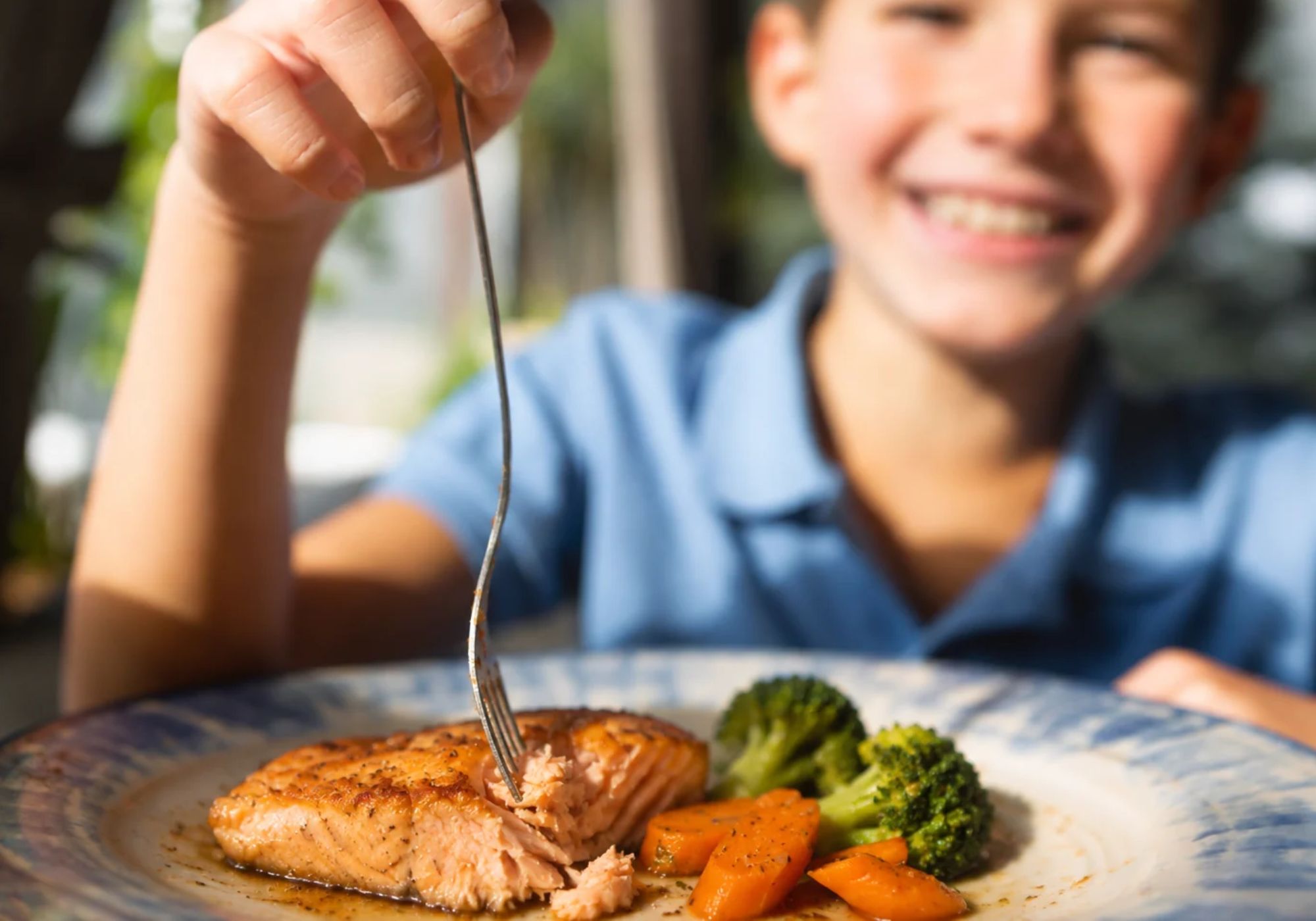
When a baby is ready for solid foods, meals should move toward real, nutrient-dense foods that include fat and other nutrients. Egg yolk, avocado, butter, and age-appropriate portions of meat or fish are examples families may consider. The priority is to nourish the child with foods that supply more than starch or sweetness.
When Snacks Replace Meals
Many parents offer snacks to soothe a child, prevent crying, or keep the child occupied. Packaged snacks are convenient, and many are marketed specifically for babies and young children. But rice puffs and similar products are often made mostly from starch. Even when labeled organic, they remain processed carbohydrate snacks.
Frequent snacks can reduce a child’s appetite for meals. Consider a five-year-old who refuses lunch and dinner but drinks milk throughout the day. Milk contains lactose, a simple sugar, along with fat and protein. It is food, and it can satisfy hunger. If the child drinks milk often between meals, the child may arrive at lunch or dinner already full. The child may refuse the meal because milk has taken the place of food.
When a snack is needed, add a source of fat: butter, cheese, egg, yogurt, or peanut butter when appropriate for the child’s age and allergy history. For young children, serve foods in forms that reduce choking risk and follow current guidance for introducing potential allergens. A snack made mostly of simple carbohydrates does not offer the same nourishment as one that includes fat and other nutrients.
The Type and Source of Fat Matter
Peanut butter is popular in the United States. It is tasty and can be part of a child’s diet, but it contains more omega-6 fats and is not a source of omega-3 fats. If peanut butter is a regular food, make sure the child’s diet also includes omega-3 sources. The balance between omega-6 and omega-3 fats in the overall diet matters.
Farm-raised fish and meat from animals that are grain-finished have more omega-6 fats and less omega-3 than their wild or grass-finished counterparts. The feed given to farm-raised fish and livestock changes the fats in the food. Grass-fed, grain-finished beef is not the same as grass-fed, grass-finished beef. These differences matter when families are choosing regular sources of protein and fat.
Chicken products also vary in how they are raised and processed. Some grocery-store chicken is treated with ammonia during processing. Chicken breast provides protein, but families should consider how the chicken was raised and processed rather than assuming the label tells the whole story.
When possible, check sourcing and prepare meals at home with simple ingredients. Food quality matters because families are choosing not only a food name, but also the fats and other nutrients that come with it.
Fat, Digestion, and Hormones Are Connected
When fat enters the digestive tract, it signals the gallbladder to contract and release bile. Bile helps digest and absorb fat. If a person consistently eats very little fat, the gallbladder receives less stimulation to contract. The liver produces bile, and the gallbladder stores it until a meal signal that it is needed.
Cholesterol is a building block for steroid hormones. During adolescence, hormone levels change, and acne involves hormones, insulin, digestion, and individual biology. Looking only at the skin misses the larger picture. Diet quality and digestive function deserve attention when teenagers develop skin problems.
The brain also contains cholesterol, and fats are important components of brain cell membranes. That is why removing fat from the diet without considering a child’s needs is a serious mistake. Statins lower cholesterol, and concerns have been raised about their effects on memory and brain health like Alzheimer’s disease or dementia. The concern should be taken seriously.
Brain Health and Children with Special Needs
Children with special needs often have digestive concerns, including dysbiosis, an imbalance in the gut microbiome. For children with ADHD or depression, begin by looking closely at the diet and digestive health. A diet built mostly around simple carbohydrates and packaged snacks does not provide the same nutritional foundation as one that includes nutrient-dense foods and healthy fats.
The gut and brain communicate through several pathways. The gut produces much of the body’s serotonin and dopamine. Gut health influence brain function through signaling, immune activity, and the availability of nutrients used in brain chemistry. Fats provide essential building blocks for cell membranes and are involved in the body’s broader systems that support neurotransmitter function.
Inflammation and digestive problems contribute to irritability, anxiety, low mood, or difficulty focusing in children. Genetic variants also influence how children process nutrients and respond to their environment.
A child may not be able to explain discomfort, fatigue, or brain fog. Parents may see the effects as behavior, emotional reactions, or trouble concentrating. Start with a healthy, nutrient-dense diet, pay attention to digestive symptoms, and consider each child’s individual needs.
When a Child Refuses Food or Seems Foggy
Food refusal has several possible causes. A child may be full from snacks or milk, dislike a texture, have difficulty chewing or swallowing, or experience digestive discomfort. Persistent food refusal, a very limited diet, or concerns about growth deserve attention.
Ammonia is produced when the body breaks down protein. The liver normally converts it into urea, which the kidneys remove. Digestive problems or other health conditions may interfere with this process and contribute to elevated ammonia. Brain fog is difficult for children to describe, and even adults may not recognize it. Ongoing digestive or cognitive symptoms need clinical evaluation.
Look at the whole child. What is the child eating? How often are snacks and milk offered? Is the diet providing enough nourishing fat? Are there digestive concerns? Could genetic differences affect nutrient needs? These questions help parents move beyond labeling a child as picky or difficult.
Keep Nourishing Fat on the Table
Brain health begins during pregnancy and continues through childhood and adolescence. Fat is part of that story. It is present in breast milk, belongs in age-appropriate solid foods, provides energy and fatty acids, and supplies building blocks the body uses to make hormones.
Look at what a child eats across the day. Are snacks crowding out meals? Is milk filling the space where food would go? Are meals built mostly around simple carbohydrates, or do they include nourishing fats and other nutrient-dense foods? Do food sourcing, digestion, or genetic differences belong in the conversation?
It is never too late to add healthy fat to the family diet. Food quality matters, and so does the combination of foods in a meal. Eating a lot of fat together with a lot of carbohydrates creates a different metabolic pattern. Start with real food, simple preparation, and attention to the individual child.
References
- Centers for Disease Control and Prevention. (2026, August 25). Maternal diet and breastfeeding. https://www.cdc.gov/breastfeeding-special-circumstances/hcp/diet-micronutrients/maternal-diet.html
- Feng, Q., Kalari, K., Fridley, B. L., Jenkins, G., Ji, Y., Abo, R., Hebbring, S., Zhang, J., Nye, M. D., Leeder, J. S., & Weinshilboum, R. M. (2011). Betaine-homocysteine methyltransferase: Human liver genotype–phenotype correlation. Molecular Genetics and Metabolism, 102(2), 126–133. https://doi.org/10.1016/j.ymgme.2010.10.010
- Institute of Medicine. (1991). Nutrition during lactation. National Academies Press. https://doi.org/10.17226/1577
- Lorsch, Z. S., & Liddle, R. A. (2026). Mechanisms and clinical implications of gut-brain interactions. Journal of Clinical Investigation, 136(1), e196346. https://doi.org/10.1172/JCI196346
- Mogadam, M., Albarelli, J., Ahmed, S. W., Grogan, E. J., & Mascatello, V. J. (1984). Gallbladder dynamics in response to various meals: Is dietary fat restriction necessary in the management of gallstones? The American Journal of Gastroenterology, 79(10), 745–747. https://pubmed.ncbi.nlm.nih.gov/6486112/
- National Institutes of Health, Office of Dietary Supplements. (n.d.). Choline: Fact sheet for health professionals. Retrieved November 8, 2026, from https://ods.od.nih.gov/factsheets/Choline-HealthProfessional/
- National Institutes of Health, Office of Dietary Supplements. (n.d.). Dietary supplements and life stages: Pregnancy. Retrieved November 8, 2026, from https://ods.od.nih.gov/factsheets/Pregnancy-HealthProfessional/
- National Institute of Child Health and Human Development. (n.d.). When breastfeeding, how many calories should moms and babies consume? Retrieved November 8, 2026, from https://www.nichd.nih.gov/health/topics/breastfeeding/conditioninfo/calories
- O’Keefe, J. H., Jr., & Harris, W. S. (2000). From Inuit to implementation: Omega-3 fatty acids come of age. Mayo Clinic Proceedings, 75(6), 607–614. https://doi.org/10.4065/75.6.607
- Patterson, K. Y., Bhagwat, S. A., Williams, J. R., Howe, J. C., Holden, J. M., & Haytowitz, D. B. (2008). USDA database for the choline content of common foods, Release 2. U.S. Department of Agriculture, Agricultural Research Service. https://www.ars.usda.gov/ARSUserFiles/80400525/Data/Choline/Choln02.pdf
- U.S. Department of Agriculture, Agricultural Research Service. (n.d.). FoodData Central. Retrieved November 8, 2026, from https://fdc.nal.usda.gov/
- U.S. Food and Drug Administration. (n.d.). Advice about eating fish: For those who might become or are pregnant or breastfeeding and children ages 1–11 years. Retrieved November 8, 2026, from https://www.fda.gov/food/consumers/advice-about-eating-fish
- Wang, L., Harnack, L., O’Brien, M., Rose, S. P., Nickols-Richardson, S. M., & Song, W. O. (2012). Impact of maternal diet on human milk composition: A systematic review. The American Journal of Clinical Nutrition, 95(4), 1053–1061. https://doi.org/10.3945/ajcn.111.029573
- Zhou, Z., Ryan, J., Ernst, M. E., Zoungas, S., Tonkin, A. M., Woods, R. L., McNeil, J. J., Reid, C. M., Curtis, A. J., Wolfe, R., Wrigglesworth, J., Shah, R. C., Storey, E., Murray, A., Orchard, S. G., & Nelson, M. R. (2021). Effect of statin therapy on cognitive decline and incident dementia in older adults. Journal of the American College of Cardiology, 77(25), 3145–3156. https://doi.org/10.1016/j.jacc.2021.04.075