Today, more and more people are turning to tools like ChatGPT and asking a simple question: “What blood tests should I do to check my health?”
The problem is – most answers are based on standard medical protocols. These protocols are designed to detect disease, not to identify early imbalances. As a result, many important markers are missed.
At the same time, we see many startups offering large, “advanced” blood panels. They often look comprehensive, but in reality:
they include too many unnecessary markers
they miss key functional markers
and they are sold as fixed packages that cannot be adjusted
Our goal is to provide clear, universal guidance – so that any person, in any country, can go to a local lab and order the right tests without overpaying or repeating what has already been done.
If you already have recent results from your annual check-up, you should not have to repeat everything. You should only add what is missing.
Order your own lab tests — simple & on your schedule.
Every marker below can be ordered on its own or as part of a panel — no referral, and no waiting for an annual check-up.
We focus on selecting markers that help identify early dysfunction – not just confirm disease. At the same time, we intentionally exclude tests that are often misleading.
Commonly ordered, serum vitamin B12 and folate do not reflect what is happening inside the cell.
These vitamins function at the cellular level, especially in methylation pathways. Blood levels only show what is circulating, not what is being used.
It is possible to have normal or elevated serum levels and still have a functional deficiency.
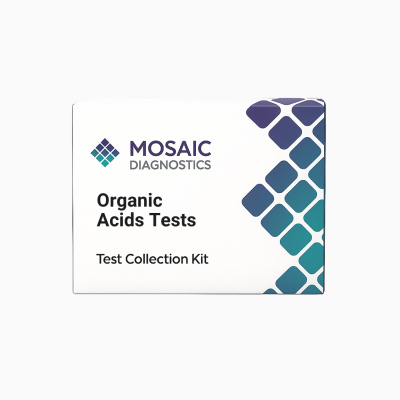
To properly assess these pathways, functional markers or tests like an organic acids test are required.
You can buy Organic Acids Test in our shop.
Functional Test
Organic Acids Test
Assesses the cellular pathways that serum B12 and folate cannot show, as discussed in this section.
When people rely on AI or standard panels, several key markers are often left out:
Homocysteine – reflects methylation efficiency and cardiovascular risk
Gamma-Glutamyl Transferase (GGT) – a powerful marker of glutathione status and detox capacity
Erythrocyte Sedimentation Rate (ESR) – a simple but valuable marker of early inflammation
Indirect Bilirubin – important for identifying patterns such as Gilbert’s syndrome
Lactate Dehydrogenase (LDH) – reflects cellular turnover and tissue stress
Ferritin and Iron Panel (Serum Iron, Total Iron Binding Capacity, Transferrin Saturation) – reflects true deficiency, impaired transport, inflammation, or iron overload.
Thyroid – Looking at the Full Picture
Thyroid testing is often incomplete in both standard practice and AI-generated recommendations.
Most conventional panels include only TSH, sometimes free T4, and more recently free T3. However, this is not enough.
At Hormunity, we include:
TSH (Thyroid Stimulating Hormone)
Free T4 (Thyroxine)
Free T3 (Triiodothyronine)
Reverse T3
Reverse T3 is essential for understanding how T4 is being converted into active T3 and how this affects metabolism at the tissue level.
Both antibodies, not just one
In addition, we include thyroid antibodies:
Thyroid Peroxidase Antibodies (TPOAb)
Thyroglobulin Antibodies (TgAb)
Many traditional practitioners check only one antibody TPOAb, which can lead to missed diagnoses.
Hashimoto’s hypothyroidism is very common, especially in women, and checking only one antibody can miss an underlying autoimmune process. At the same time, we are seeing an increase in cases of Graves’ disease, including in men. This is why checking thyroid antibodies at least once a year is important for both men and women.
Metabolic Health – Looking Earlier
Fasting glucose and HbA1c is not enough to assess metabolic health. It can remain normal while insulin is already elevated.
That is why we include fasting insulin – one of the earliest indicators of metabolic dysfunction.
Why CBC Must Include Differential
A complete blood count without differential provides very limited information. It gives numbers, but not the context needed to understand what is actually happening in the body.
The differential breaks down white blood cells into their subtypes – neutrophils, lymphocytes, monocytes, eosinophils, and basophils – and this is where real clinical insight begins.
It allows us to see:
immune system activity and how the body is responding
patterns of acute vs chronic inflammation
possible viral, bacterial, or allergic tendencies
indirect signs of nutrient deficiencies (such as B9, B12, protein status)
stress patterns and immune suppression
For example, two people can have the same total WBC count, but completely different distributions – and therefore completely different underlying physiology.
Without the differential, these patterns are missed.
Timing and Preparation Matter More Than People Think
Another important issue we often see in traditional practice is a lack of attention to how blood tests are performed.
In many cases, there is no clear guidance on:
time of day
whether the test is done fasting
consistency between repeated tests
This matters more than most people realize.
The body is dynamic and responds to food, stress, sleep, and circadian rhythms. Hormones, glucose, and even blood cell distribution can change throughout the day.
How to take a comparable test
For this reason, we recommend:
performing any blood tests in the morning
on an empty stomach
and under consistent conditions each time
This allows results to be comparable over time and helps identify real patterns – rather than fluctuations caused by external factors.
If tests are done at different times of day or under different conditions, results can vary significantly, making interpretation less reliable.
COMPLETE MARKER LIST
CBC with Differential
WBC
RBC
Hemoglobin
Hematocrit
MCV
MCH
MCHC
RDW
Platelet Count
MPV
Neutrophils (%)
Neutrophils (absolute)
Lymphocytes (%)
Lymphocytes (absolute)
Monocytes (%)
Monocytes (absolute)
Eosinophils (%)
Eosinophils (absolute)
Basophils (%)
Basophils (absolute)
Comprehensive Metabolic Panel (CMP)
Glucose
Calcium
Sodium
Potassium
Chloride
CO₂ (Bicarbonate)
BUN
Creatinine
eGFR
BUN/Creatinine Ratio
Total Protein
Albumin
Globulin
A/G Ratio
Total Bilirubin
Alkaline Phosphatase (ALP)
AST
ALT
Lipid Panel
Total Cholesterol
LDL Cholesterol
HDL Cholesterol
Triglycerides
Metabolic
Fasting Insulin
Hemoglobin A1c (HbA1c)
Inflammation & Methylation
hs-CRP
ESR (Erythrocyte Sedimentation Rate)
Homocysteine
Nutrients
Vitamin D (25-OH)
Thyroid Panel
TSH
Free T4
Free T3
Reverse T3
Thyroid Peroxidase Antibodies (TPOAb)
Thyroglobulin Antibodies (TgAb)
Iron Panel
Ferritin
Serum Iron
TIBC (Total Iron Binding Capacity)
Transferrin Saturation
Liver
GGT
Direct Bilirubin
Indirect Bilirubin
Cellular / Tissue
Lactate Dehydrogenase (LDH)
Starting with basic laboratory testing allows for earlier identification of changes in the body before they progress into more significant dysfunction. By evaluating foundational markers, we can better understand the body’s current needs, detect early metabolic and inflammatory shifts, and create a more individualized approach to supporting long-term health. These laboratory tests can be ordered directly through Hormunity for a more functional and physiology-based assessment of your health.
Magnesium and Mental Health: The Mineral of Calm, Clarity, and Energy
Magnesium is one of the most important minerals for the human body — and the mind. It is present in every cell and is involved in hundreds of chemical processes that keep us alive and functioning. The brain, nervous system, muscles, and heart all rely on a steady supply of magnesium to work properly. In…
The $11 Lab Marker That May Tell You More About Your Brain Than You Think
Most people have never heard of the anion gap, yet it can be calculated from a simple Comprehensive Metabolic Panel (CMP) that costs $11. No special testing is required. If you already have sodium, potassium, chloride, and CO₂ (bicarbonate) on your lab report, you can calculate your anion gap and gain valuable insight into your…
The Silent Allergy Saboteurs: The Histamine–Methylation Connection Behind Your Symptoms
Histamine intolerance is more than just “seasonal allergies.” It’s a chronic overload of histamine in the body — a situation where the amount you take in and release is greater than your body’s ability to break down and clear. Histamine: The Double-Edged Sword Histamine is a natural molecule involved in immune defense, stomach acid production,…
Recurrent UTIs and Bladder Infections: The Hormonal Connection Every Woman Should Know
Recurrent bladder infections affect millions of women and are one of the most common reasons for repeated antibiotic use. While bacteria are responsible for causing urinary tract infections, the question often remains: why do some women continue to develop infection after infection while others rarely experience one? The answer may lie in the body’s own…
Parkinson’s Disease: Protecting Your Brain with Detox & Antioxidants
Parkinson’s disease is a condition where certain brain cells slowly stop working, especially the ones that make dopamine — a chemical that helps control movement, mood, and motivation. As dopamine drops, people may notice tremors, stiffness, slower movements, balance issues, and changes in voice or facial expression. Over time, memory and thinking can also be…
Minerals: The Missing Link to Cellular Energy, Hormone Balance, and Whole-Body Health
Most people know vitamins are important — but few realize that minerals are the “spark plugs” of your cells. They activate the enzymes that drive nearly every process in your body, from hormone production to detoxification to energy creation. Without enough minerals, even the healthiest diet and lifestyle can fall short, leaving you feeling fatigued,…
Why Hyperpigmentation Happens Even Without Sun Exposure
Hyperpigmentation is one of the most misunderstood skin problems because most people still believe it starts with the sun. That’s also why so many women spend years on expensive skincare, chemical peels, lasers, and brightening products, only to watch pigmentation come back months later. The truth is that dark spots often start much deeper than…
What One $7 CBC Test Can Tell You About Your Health
A CBC — complete blood count — is one of the most basic and affordable blood tests. In many places, the actual cash price can be around $7, even though insurance may be billed $60 or more for the same basic test. Many people underestimate the CBC because it looks simple. They see that everything is “within range”…
Read more
Instagram
Latest insights & updates from our community
1.2M followers on Instagram. At Hormunity, we combine cutting-edge science with a personalized approach.