Hyperpigmentation is one of the most misunderstood skin problems because most people still believe it starts with the sun. That’s also why so many women spend years on expensive skincare, chemical peels, lasers, and brightening products, only to watch pigmentation come back months later. The truth is that dark spots often start much deeper than the skin itself.
Pigmentation starts deeper than the skin
Melanin, the pigment responsible for skin color, is produced by specialized cells called melanocytes. But melanocytes do not work independently. They constantly respond to signals coming from inside the body: hormones, inflammation, oxidative stress, nutrient deficiencies, thyroid function, and the body’s ability to process and eliminate toxins.
This is why pigmentation can appear even in women who avoid sun exposure. UV light can trigger pigment production, but for many people it is not the root cause.
If sun were the only explanation, we wouldn’t see pigmentation appearing on areas like the upper back, shoulders, chest, or hands in people who have very limited direct sun exposure. We also wouldn’t see worsening pigmentation during menopause, pregnancy, thyroid dysfunction, chronic stress, or periods of poor metabolic health.
What the liver has to do with your skin
One of the biggest overlooked factors is liver function. Every day your liver processes hormones, toxins, inflammatory compounds, medications, and metabolic waste. When liver function becomes overwhelmed, these compounds can stay in circulation longer than they should. Instead of being efficiently eliminated, they continue contributing to inflammation and oxidative stress throughout the body.
Bile plays an important role in this process. Most people think bile only helps digest fats, but bile is also involved in eliminating hormone metabolites and fat-soluble compounds. If bile flow becomes sluggish, elimination changes. Over time this can increase the inflammatory burden inside the body.
Then comes the gut.
Then comes the gut
Even if the liver processes toxins properly, an inflamed gut or disrupted microbiome may allow these compounds to be reabsorbed instead of eliminated. This creates a cycle where the body remains under chronic inflammatory stress.
Why does this matter for pigmentation?
Why does this matter for pigmentation?
Because inflammation and oxidative stress directly influence melanocyte activity. Oxidative stress increases signaling pathways involved in melanin production. In simple terms, the more oxidative stress the body experiences, the stronger the signal for melanocytes to produce pigment.
This is also why conditions like rosacea should not always be viewed as isolated skin problems. Rosacea is increasingly understood as a condition associated with chronic inflammation, altered immune responses, vascular changes, and often gut dysfunction. The redness appears on the skin, but the inflammatory processes are happening much deeper. Skin frequently reflects what is happening internally.
Iron metabolism
Iron metabolism is another factor that is rarely discussed.
Both iron deficiency and iron overload can contribute to pigmentation problems. Excess iron may increase oxidative stress through free radical formation, damaging tissues and promoting inflammatory signaling. On the other hand, low iron can impair oxygen delivery to tissues, increase physiological stress, and affect thyroid function. This is one reason ferritin should never be interpreted without looking at inflammation markers and the broader clinical picture.
Thyroid function
Thyroid function also matters more than most people realize.
Thyroid hormones regulate metabolic activity in nearly every cell. When thyroid function slows, detoxification pathways slow, skin turnover changes, and hormone metabolism becomes less efficient. Many women with pigmentation also experience symptoms associated with thyroid imbalance: fatigue, hair loss, cold intolerance, constipation, or difficulty maintaining energy.
Vitamin D
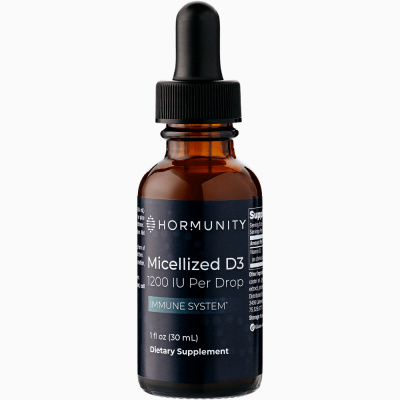
Vitamin D plays another important role. Beyond bone health, vitamin D influences immune regulation, inflammation, oxidative stress, and hormone balance. Chronic low vitamin D levels often mean the body remains in a more inflammatory state, creating another environment where pigmentation may worsen.
You can buy Vitamin D in our shop.
Supplement
Micellized D3 1200 IU
Delivers vitamin D3 in a water-soluble micellized form for absorption, as discussed in this section.
This helps explain why pigmentation frequently appears during pregnancy, menopause, chronic stress, hormonal changes, or periods of metabolic dysfunction. These are all times when the body is under increased physiological burden.
For decades, Japanese women have been known for valuing bright, even-toned skin and preserving it with age. Their approach has never been entirely external. Internal support, particularly antioxidants like vitamin C, has long been considered important alongside topical skincare because skin reflects what is happening inside the body.
Support at the biochemical level
This is where support at the biochemical level becomes relevant.
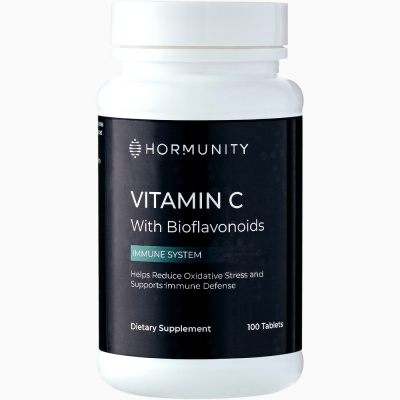
Vitamin C is not only important for collagen production. It functions as a major antioxidant, helping neutralize free radicals and reduce oxidative stress, one of the drivers involved in excessive pigment production. Lower oxidative stress means less stimulation for melanocytes to produce excess melanin.
You can buy Vitamin C in our shop.
Supplement
Vitamin C with Bioflavonoids
Supports collagen production and lowers oxidative stress, as discussed in this section.
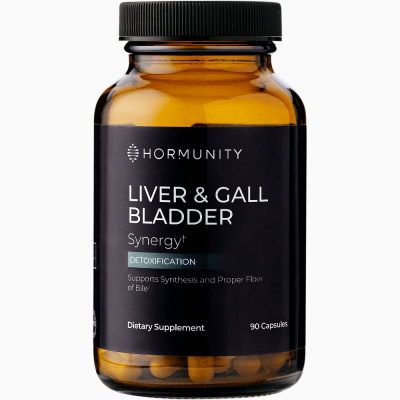
Supporting liver and bile physiology may also matter for some individuals. Ingredients such as milk thistle provide antioxidant support for liver cells, taurine participates in bile acid metabolism, ox bile supports fat digestion and bile availability during meals, while artichoke has traditionally been used to support bile flow. These mechanisms are part of why Liver & Gallbladder Support was formulated the way it was.
You can buy Liver & Gallbladder Support in our shop.
Supplement
Liver & Gall Bladder Synergy
Supports liver and bile physiology, as discussed in this section.
Real improvement in pigmentation usually requires working both inside and outside the body.
That means supporting detox pathways, understanding iron status, optimizing vitamin D, evaluating thyroid function, improving bile flow, reducing inflammation, and addressing oxidative stress internally, while externally protecting the skin with daily SPF, improving barrier function, and using targeted skincare.
Because pigmentation is rarely only a skin problem.
And lasting results happen when you stop treating the spot itself and start understanding the physiology behind why your body created it in the first place.
Bibliography
Astuya, A., Caprile, T., Castro, M., Salazar, K., García, M. de L., Reinicke, K., Rodríguez, F., Vera, J. C., Millán, C., Ulloa, V., Low, M., Martínez, F., & Nualart, F. (2005). Vitamin C uptake and recycling among normal and tumor cells from the central nervous system. Journal of Neuroscience Research, 79(1–2), 146–156. https://doi.org/10.1002/jnr.20326
Calvino, C., Souza, L. L., Costa-e-Sousa, R. H., Almeida, N. A., Trevenzoli, I. H., & Pazos-Moura, C. C. (2012). Hypothyroidism reduces ObRb-STAT3 leptin signalling in the hypothalamus and pituitary of rats associated with resistance to leptin acute anorectic action. Journal of Endocrinology, 215(1), 129–135. https://doi.org/10.1530/JOE-11-0476
Tanaka, Y. T., Tanaka, K., Kojima, H., Hamada, T., Masutani, T., Tsuboi, M., & Akao, Y. (2013). Cynaropicrin from Cynara scolymus L. suppresses photoaging of skin by inhibiting the transcription activity of nuclear factor-kappa B. Bioorganic & Medicinal Chemistry Letters, 23(2), 518–523. https://doi.org/10.1016/j.bmcl.2012.11.034
Lin, J. Y., & Fisher, D. E. (2007). Melanocyte biology and skin pigmentation. Nature, 445(7130), 843–850. https://doi.org/10.1038/nature05660
Perello, M., Çakir, I., Cyr, N. E., Romero, A., Stuart, R. C., Chiappini, F., Hollenberg, A. N., & Nillni, E. A. (2010). Maintenance of the thyroid axis during diet-induced obesity in rodents is controlled at the central level. American Journal of Physiology-Endocrinology and Metabolism, 299(6). https://doi.org/10.1152/ajpendo.00448.2010
Calvino, C., Souza, L. L., Costa-e-Sousa, R. H., Almeida, N. A., Trevenzoli, I. H., & Pazos-Moura, C. C. (2012). Hypothyroidism reduces ObRb-STAT3 leptin signalling in the hypothalamus and pituitary of rats associated with resistance to leptin acute anorectic action. Journal of Endocrinology, 215(1), 129–135. https://doi.org/10.1530/JOE-11-0476
Obradovic, M., Sudar-Milovanovic, E., Soskic, S., Essack, M., Arya, S., Stewart, A. J., Gojobori, T., & Isenovic, E. R. (2021). Leptin and obesity: Role and clinical implication. Frontiers in Endocrinology, 12, 585887. https://doi.org/10.3389/fendo.2021.585887
El Amrousy, D., El-Afify, D., & Salah, S. (2022). Insulin resistance, leptin and adiponectin in lean and hypothyroid children and adolescents with obesity. BMC Pediatrics, 22(1), 245. https://doi.org/10.1186/s12887-022-03318-x
Lee, Y. I., Choi, S., Roh, W. S., Lee, J. H., & Kim, T. G. (2021). Cellular senescence and inflammaging in the skin microenvironment. International Journal of Molecular Sciences, 22(8), 3849. https://doi.org/10.3390/ijms22083849
Kim, J. C., Park, T. J., & Kang, H. Y. (2022). Skin-aging pigmentation: Who is the real enemy? Cells, 11(16), 2541. https://doi.org/10.3390/cells11162541
Ogland-Hand, C., Ciesielski, T. H., Daunov, K., Bean, M. K., & Nock, N. L. (2023). Food insecurity and nutritional challenges in adolescent and young adult cancer survivors in the U.S.A.: A narrative review and call to action. Nutrients, 15(7), 1731. https://doi.org/10.3390/nu15071731
Mahmood, A., Canham, S., Weldrick, R., Patille, R., & Erisman, M. (2023). Meanings of aging in the right place for housing insecure older adults in temporary housing. Innovation in Aging, 7(Supplement_1), 64–65. https://doi.org/10.1093/geroni/igad104.0207
Obradovic, M., Sudar-Milovanovic, E., Soskic, S., Essack, M., Arya, S., Stewart, A. J., Gojobori, T., & Isenovic, E. R. (2021). Leptin and obesity: Role and clinical implication. Frontiers in Endocrinology, 12, 585887. https://doi.org/10.3389/fendo.2021.585887
When people hear high cholesterol, the immediate assumption is often: I ate too much fat. I need to avoid eggs. I probably need medication. But cholesterol is one of the most misunderstood molecules in the body. Cholesterol is not simply something that builds up and causes problems. Your body uses cholesterol to produce estrogen, progesterone, testosterone, cortisol, vitamin…
Why You Can’t Lose Weight: The Hidden Role of Leptin Resistance, Thyroid Function, and Metabolism
Weight gain is often explained as eating too much and moving too little. But if that were the full story, many people who carefully track calories, exercise consistently, and even use GLP-1 medications would not continue struggling. One of the most overlooked reasons behind stubborn weight gain and difficulty losing weight is a hormone called leptin….
Burning cheeks and a face that reacts to everything? Some of rosacea’s inflammation may start in the gut, with low stomach acid and a leaky intestinal lining.
The $11 Lab Marker That May Tell You More About Your Brain Than You Think
Most people have never heard of the anion gap, yet it can be calculated from a simple Comprehensive Metabolic Panel (CMP) that costs $11. No special testing is required. If you already have sodium, potassium, chloride, and CO₂ (bicarbonate) on your lab report, you can calculate your anion gap and gain valuable insight into your…
No single formula prevents breast cancer, but some risk factors are within reach: estrogen metabolism, liver and gut function, hormone prescriptions, everyday chemicals, food and alcohol.
The Silent Allergy Saboteurs: The Histamine–Methylation Connection Behind Your Symptoms
Histamine intolerance is more than just “seasonal allergies.” It’s a chronic overload of histamine in the body — a situation where the amount you take in and release is greater than your body’s ability to break down and clear. Histamine: The Double-Edged Sword Histamine is a natural molecule involved in immune defense, stomach acid production,…
Today, more and more people are turning to tools like ChatGPT and asking a simple question:“What blood tests should I do to check my health?” The problem is – most answers are based on standard medical protocols. These protocols are designed to detect disease, not to identify early imbalances. As a result, many important markers…
Functional medicine is a subset of integrative medicine: a science-based, personalized approach that looks at the whole person — their genome, lifestyle and environment — and treats the root cause rather than the symptom. This article covers where the field came from, what it looks like today, the three principles it rests on, and the clinical disorders it sets out to address.
Read more
Instagram
Latest insights & updates from our community
At Hormunity, we combine cutting-edge science with a personalized approach.